
Think you know Japan? Think again. It’s a country of contradictions: wealthy yet shrinking, quirky yet globally powerful. From fried chicken Christmases to vending machine empires, Japan mixes economic strength with cultural oddities you won’t find anywhere else.
Here are five weird Japan facts — backed by numbers, history, and global comparisons — that might just change how you see the world’s third-largest economy.
1. Christmas in Japan Means… KFC
In most of the world, Christmas dinner means turkey or ham. In Japan, it means fried chicken. This tradition began in 1974 when KFC launched a marketing campaign called Kurisumasu ni wa Kentakkii — “Kentucky for Christmas.” At the time, turkey was nearly impossible to find in Japan, and the clever positioning of fried chicken as a festive substitute took hold.
Today, it’s no longer a marketing stunt but a nationwide ritual. It’s estimated that more than 3.6 million Japanese families eat KFC during Christmas week, generating over $60 million in sales in just a few days. That’s close to 10 percent of the company’s yearly revenue in Japan, concentrated in one week. Many customers pre-order buckets weeks in advance, and long lines form outside stores every Christmas Eve.
2. Japan’s Vending Machine Empire
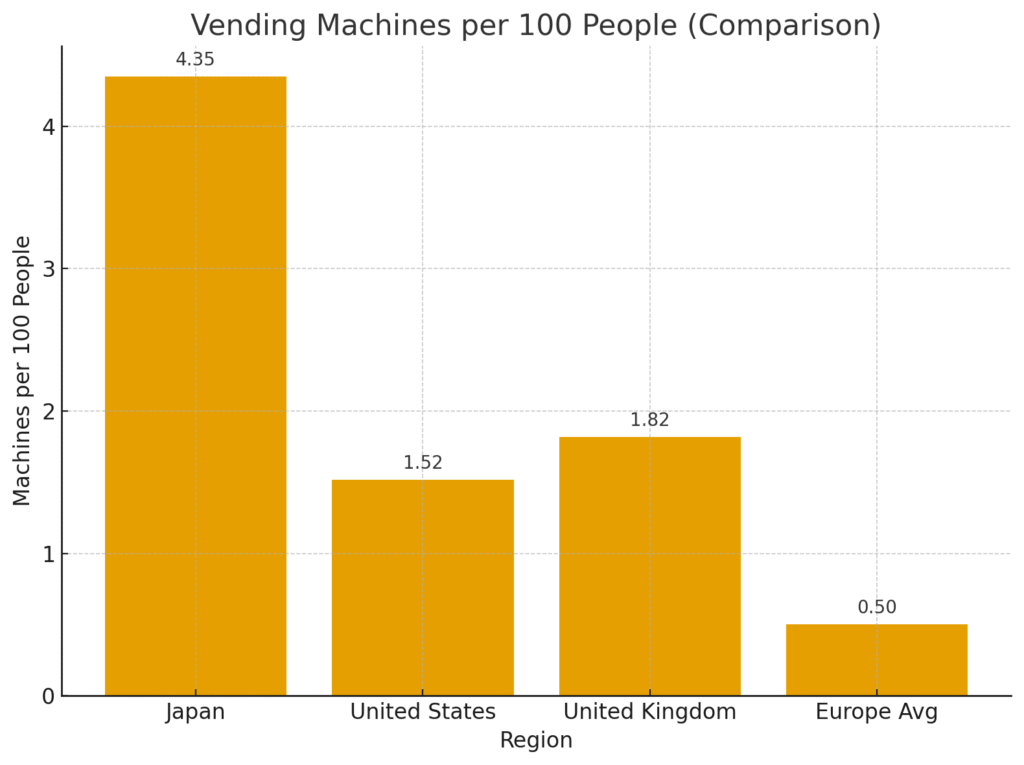
Walk any Japanese street, and chances are a vending machine is within sight. With around 4–5 million machines across the country, Japan has roughly one for every 20 to 30 people. This is not a quirky gimmick but a social and economic adaptation.
Urban density makes retail space scarce, so machines fit where shops cannot. Japan’s famously low crime rate also ensures that vandalism and theft are rare, making vending a safe investment. And in a culture that values punctuality and efficiency, the ability to buy food, drinks, or even an umbrella at any hour meets genuine demand.
The variety is staggering. Beyond soda and snacks, vending machines offer wagyu beef, fresh eggs, ramen, toys, and even fortunes at Shinto shrines. While the United States technically has more machines overall — about seven million — Japan’s density is unmatched, making it the undisputed vending capital of the world.
3. Adult Diapers Outselling Baby Diapers
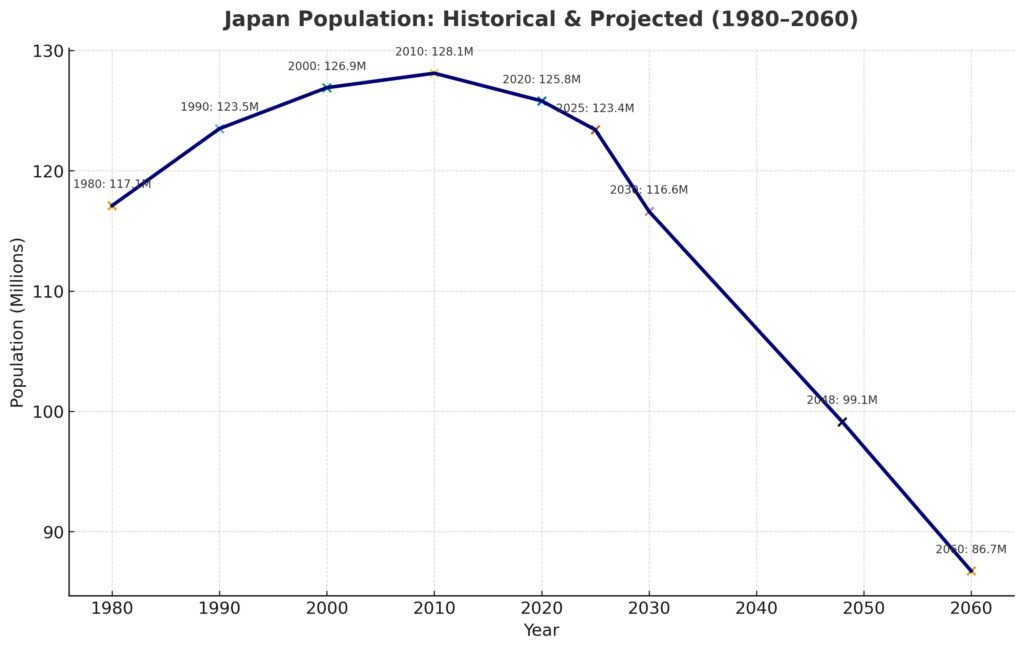
One of the starkest signs of Japan’s demographic shift is visible on store shelves. In recent years, adult diaper sales have overtaken baby diapers. This isn’t a fluke but a direct reflection of the country’s population profile. Nearly 30 percent of Japanese citizens are over 65, the highest proportion in the world, while fertility rates hover around 1.2 children per woman — far below replacement.
The impact on markets has been dramatic. In 2013, Unicharm, one of Japan’s largest manufacturers, reported that adult diapers outsold baby diapers for the first time, and the gap has only widened since. Today, adult incontinence products generate more than $2 billion annually, while baby diapers continue to decline in volume. Retailers are shifting shelf space accordingly, creating stores that feel more like they cater to the elderly than the young.
4. Pokémon, Mario, and Hello Kitty: $20 Billion in Soft Power
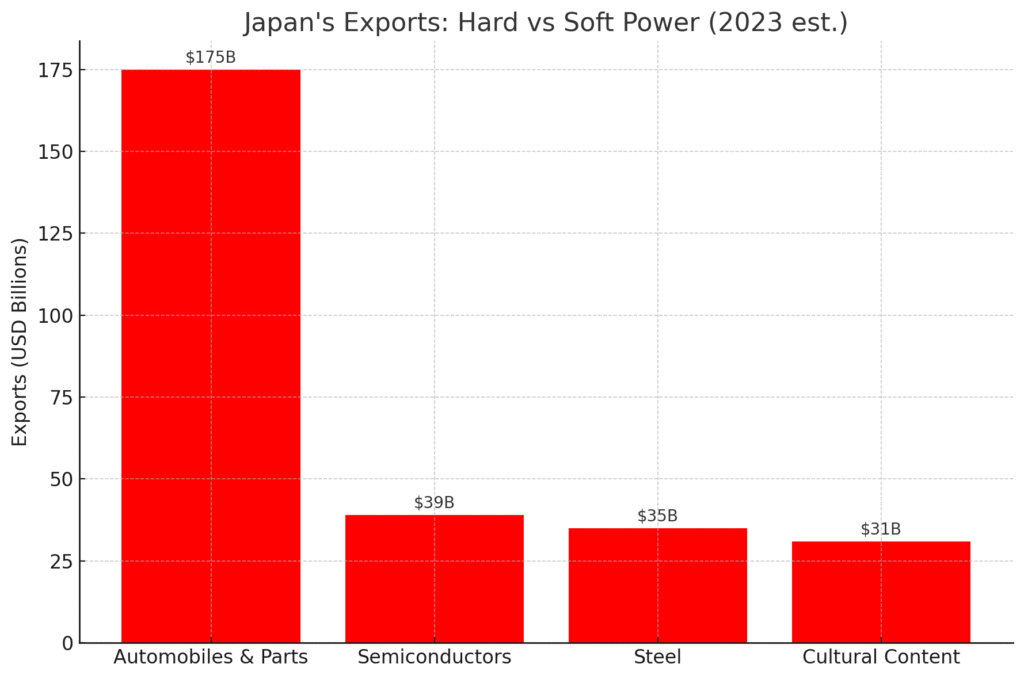
Japan is famous for its cars and electronics, but one of its fastest-growing exports doesn’t come from factories — it comes from culture. Franchises like Pokémon, Mario, and Hello Kitty, combined with anime, mobile games, and J-pop, generate more than ¥4.7 trillion ($20–32 billion) annually. That’s nearly as large as Japan’s steel exports and only slightly behind semiconductors. Automobiles still dominate at over $170 billion, but cultural exports are no longer a side show — they are one of Japan’s top export pillars.
This is what international relations scholars call soft power — a country’s ability to influence others not through military or economic pressure, but through culture, media, and values. Japan doesn’t project power with aircraft carriers or energy dominance. Instead, it shapes global imagination through Pikachu, Demon Slayer, Mario, and Studio Ghibli. These characters and stories reach places where Japanese cars or steel never could: into childhoods, daily life, and global popular culture.
Why is this important? Because soft power creates long-lasting connections. People who grow up with Pokémon or Ghibli films often carry positive associations with Japan into adulthood. That goodwill can make Japan a preferred trade partner, a tourism destination, or even a model for policy and governance. In a world where demographics and hard industries are challenging Japan, its cultural exports provide not only revenue but also enduring global influence.
5. Greater Tokyo’s $2 Trillion Economy
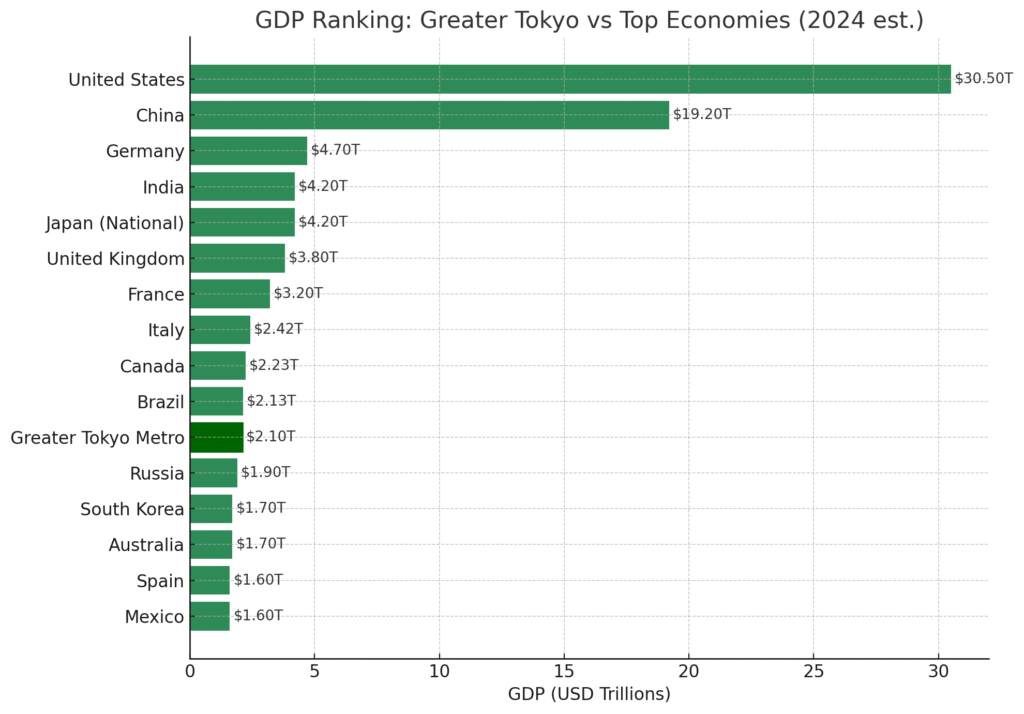
Finally, no list of weird Japan facts is complete without mentioning Tokyo. The Greater Tokyo Area — which includes Tokyo, Kanagawa, Saitama, and Chiba — is home to around 38 million people and produces over $2 trillion in annual GDP.
If it were a country, Greater Tokyo would rank eighth in the world economy, in line with countries such as Canada, South Korea, Brazil, Russia, Australia, Spain, and Mexico. Only the U.S., China, Germany, Japan as a whole, India, the UK, Italy, and France significantly surpass it. The metro economy alone outranks most members of the G20.
This concentration of economic activity illustrates how megacities are not just local hubs but global forces. In many ways, Tokyo functions as both a city and a nation-state, shaping trade, finance, and culture far beyond Japan’s borders.
Final Takeaway
Japan is quirky, aging, powerful, and still rewriting history. Christmas dinner is fried chicken, vending machines line the streets, adult diapers outsell baby ones, Pokémon rivals steel, and Tokyo alone outproduces Canada. These facts are funny, strange, and sometimes unsettling — but together they reveal how Japan continues to surprise the world.
Which of these Japan facts surprised you the most?