

Japan’s economy is full of contradictions — rich, shrinking, and still rewriting history. Most people assume the country peaked in the 1980s and never recovered, but that’s only half the story.
Step back and you’ll see a nation that still shapes the global economy. Japan is home to the world’s third-largest stock market, supplies critical technology to nearly every major industry, and lends more money abroad than any other country. At the same time, it struggles with a shrinking population and the heaviest debt load in modern history.
In short, Japan is an economy of paradoxes. At its peak, Tokyo’s real estate was valued higher than the entire U.S. Today, the country carries the world’s highest debt ratio — but is also America’s biggest foreign creditor. And while the population is shrinking rapidly, Japan remains the world’s fifth-largest economy.
Here are five surprising facts about Japan’s economy that show why the world’s most misunderstood economy is still rewriting history.
1. Tokyo’s Land Once Outvalued the U.S.
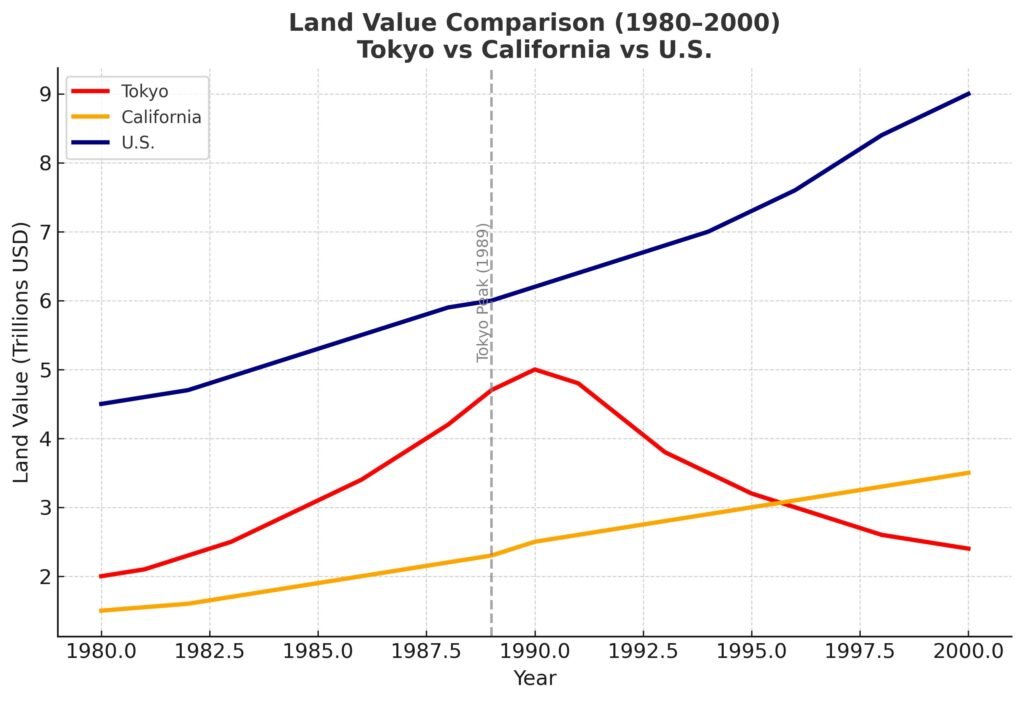
In the late 1980s, Japan’s asset bubble reached truly surreal levels. At the height of the frenzy, estimates claimed Tokyo’s land was worth more than all of California — and in some extreme versions, more than the entire United States.
This wasn’t just market gossip. Fueled by ultra-low interest rates, speculative lending, and investor mania, land prices in central Tokyo skyrocketed to absurd valuations. Corporations and wealthy families borrowed heavily to buy property, confident prices could only go higher.
Japanese conglomerates even made splashy purchases abroad. Mitsubishi Estate famously bought New York’s Rockefeller Center in 1989, a symbol of Japan’s newfound financial clout. But just a few years later, when the bubble collapsed, real estate prices plunged by as much as 80% in some areas.
The bursting of that bubble didn’t just destroy paper wealth. It created a financial overhang so severe that it haunted Japan’s economy for decades.
2. The Lost Decade (I.e Nikkei’s Lost Generation)
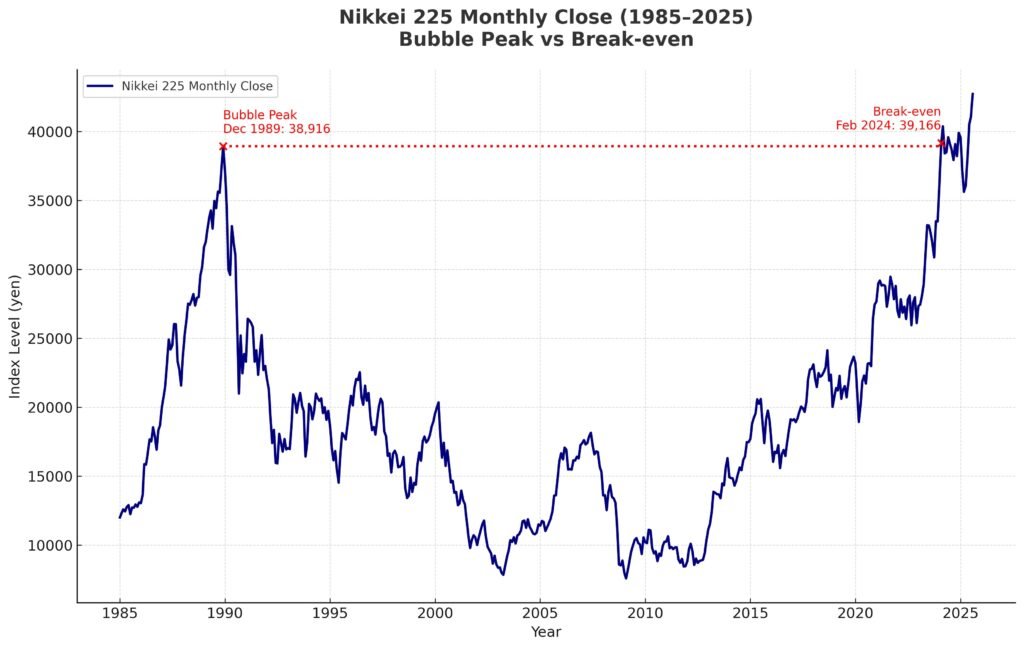
Stock markets usually bounce back within years of a crash. The U.S. took less than 7 years to recover from the 2008 crisis. But Japan? Investors had to wait 34 years.
The Nikkei 225 peaked at 38,915 on December 29, 1989. For decades, it became a symbol of stagnation. Even as Japan remained an industrial giant, the stock market languished. By 2010, the index had fallen below 10,000 — a staggering 75% drop from the peak.
The recovery didn’t come until 2023, when the Nikkei finally surpassed its 1989 high. A full generation had passed. Parents who lost fortunes in the bubble watched their children finally break even.
And yet, throughout this “lost generation,” Japanese companies quietly prospered. Toyota became the world’s largest carmaker. Sony pioneered consumer electronics and gaming. Nintendo reshaped entertainment globally. Investors may have suffered, but Japanese corporations stayed competitive — proving again that the Nikkei’s struggles weren’t the whole story.
3. The World’s Highest Debt Ratio
Japan’s public debt today stands at over 250% of GDP. That’s more than double the level in the United States, and far higher than countries like Italy or Greece that once dominated debt headlines.
Normally, such a debt load would spark fears of default. But Japan is unique in how it manages its obligations. Roughly 90% of the debt is held domestically — by Japanese banks, insurance companies, pension funds, and most of all, the Bank of Japan. That means the country essentially owes money to itself.
Low interest rates make this even more sustainable. For decades, Japan’s borrowing costs hovered near zero. The government can roll over debt cheaply, while households continue to save heavily. In fact, Japanese households hold over $15 trillion in financial assets, much of which flows into government bonds.
This doesn’t mean the debt problem is harmless. An aging population means more spending on pensions and healthcare, while the tax base shrinks. But Japan shows that debt ratios alone don’t tell the full story — structure matters as much as size.
4. The Biggest Lender Abroad
Despite record-breaking debt at home, Japan is the largest foreign lender in the world. It holds over $1.1 trillion in U.S. Treasuries, edging out China and the United Kingdom.
And it doesn’t stop with America. Japanese investors are active across Europe, Southeast Asia, and Latin America. Pension funds and institutional investors pour billions into overseas bonds and real estate, seeking better returns than they can find at home.
This paradox — debtor at home, creditor abroad — is one of the most striking features of Japan’s economy. It reflects the country’s huge pool of domestic savings, conservative investment culture, and trade surpluses built over decades.
When you see Japan on the list of America’s biggest creditors, remember: this is a country with the world’s heaviest debt burden — but also the world’s strongest lending arm.
5. Shrinking Yet Still Top-Five
Japan remains the world’s fifth-largest economy, with a GDP of around $4 trillion. But beneath that number lies a demographic time bomb.
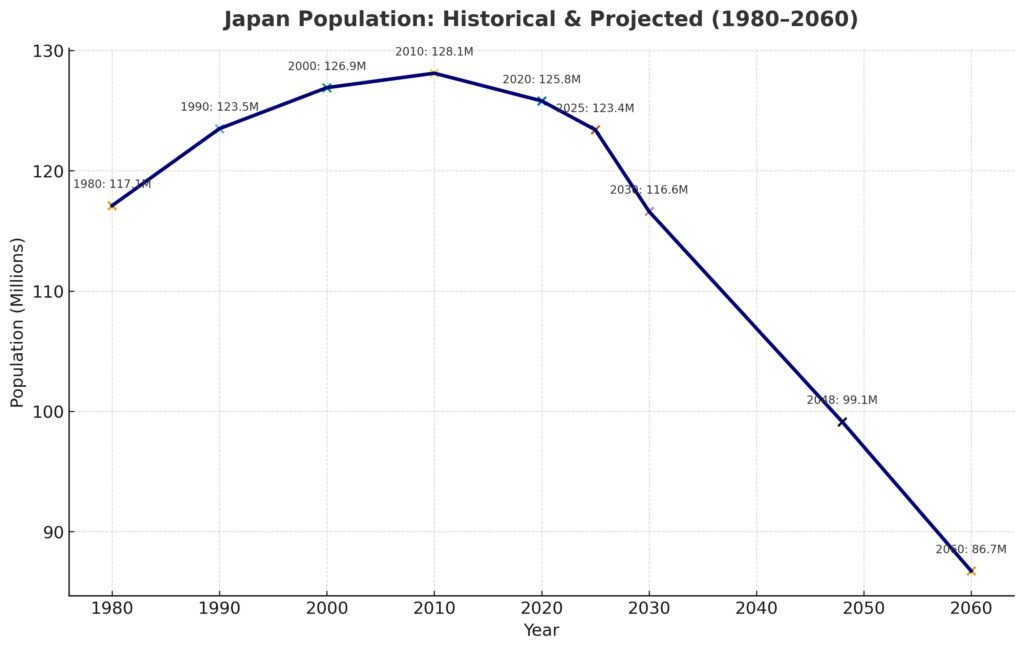
The population peaked at about 128 million in 2010 and has been falling ever since. Today, it stands near 123 million. By 2060, it could shrink by 30%, leaving fewer than 90 million people.
The challenges are enormous. Fewer workers mean slower growth and higher pressure on social programs. Rural towns are already hollowing out, with abandoned homes and declining services. Entire industries face labor shortages.
Yet Japan still punches above its weight. Its companies dominate global supply chains in cars, robotics, and semiconductors. Its cultural exports — anime, gaming, cuisine — shape global tastes. And its wealth per capita remains among the highest in the world.
In other words, Japan is shrinking — but not disappearing. It remains a heavyweight even as its population falls.
Conclusion
Japan is often dismissed as a country that had its moment in the sun and then faded. But the reality is far more nuanced.
This is a nation where:
-
Debt is sky-high, yet mostly owed domestically.
-
Stock markets took a generation to recover, but global companies thrived anyway.
-
A shrinking population hasn’t stopped Japan from remaining a top-five economy.
-
And a “stagnant” nation still bankrolls the world through foreign lending.
Debt-ridden but wealthy, shrinking yet powerful, bubble-scarred yet resilient — Japan’s economy is full of paradoxes.
For investors, entrepreneurs, and global business watchers, Japan isn’t just a cautionary tale of bubbles. It’s a lesson in resilience, adaptation, and the strange ways economies defy predictions.
If you want to understand where the world might be headed on debt, demographics, and growth — watch Japan closely. Because when it comes to rewriting economic history, Japan has been doing it for decades.